
Kuripe Amethyst
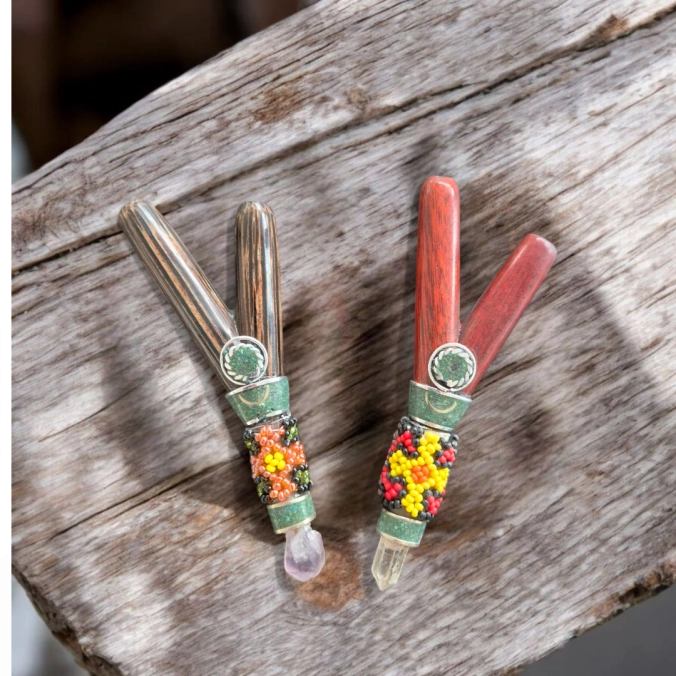
Handmade kuripe of about 12 cm, decorated with natural stones, including amethyst or white quartz, with turquoise accents and traditional bead ornamentation. It comes with an attached cord, so it can be carried easily. T...
Emballage Discret
Boîte neutre, sans marque
Expédition UE
Avec suivi, 5 à 7 jours ouvrés
Paiement sécurisé
PayPal, cartes, virement
Réservé aux adultes
À partir de 18 ans
Kuripe Amethyst en bref
Les informations essentielles sur ce produit.
Tube coudé
Le tube est coudé pour que l'embout se place confortablement contre la narine.
Bois, argent ou pierre
Fabriqué en bois (Sawo, teck ou tamarin) ou en argent, parfois orné de pierre naturelle. Le matériau est indiqué sur chaque fiche produit.
Motifs d'animaux
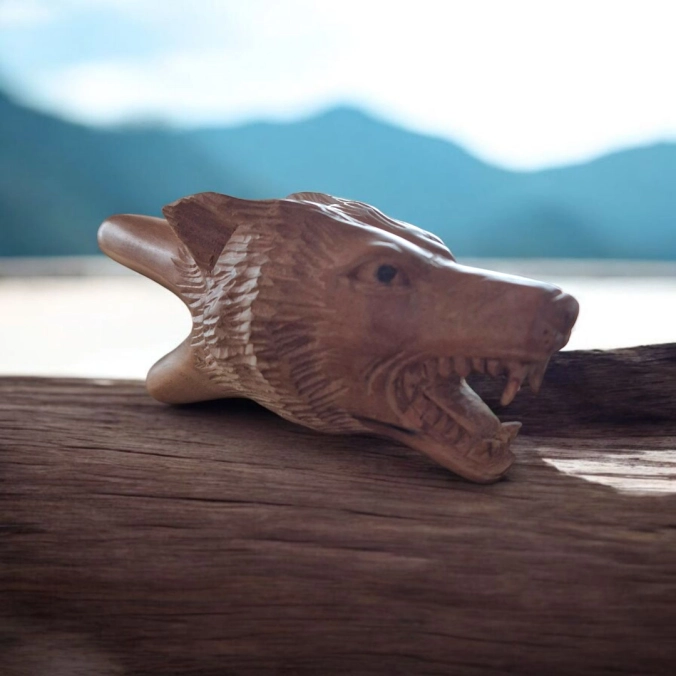
De nombreux applicateurs représentent une tête d'animal : jaguar, aigle, loup ou colibri. Le motif figure dans le titre du produit.
Entretien
Essuyez-le avec un chiffon sec et tenez-le à l'écart de l'eau. Ne le nettoyez pas avec de l'Agua de Florida.
Caractéristiques techniques
Selon la fiche produitChonta or Palo Sangre wood, amethyst or white quartz, turquoise, beads, cord
Selon la description du produit
Tube applicateur
200101
Matériaux
About 12 cm kuripe in Chonta or Palo Sangre wood, decorated with amethyst or white quartz, turquoise, beads and a cord.
- Chonta woodBlack or grey wood sold as 'Chonta'; in the Amazon the name is usually applied to palm wood.
En savoir plus sur ce matériau
'Chonta' is a common name in Peru and the wider Amazon for the hard, dark wood of certain palms, so botanical identification varies and the species is not stated. The product description gives the colour as black or grey.
- Palo Sangre woodRed-toned wood sold as 'Palo Sangre' (roughly 'blood wood'); the species is not stated in the product description.
En savoir plus sur ce matériau
'Palo Sangre' is Spanish for roughly 'blood wood' and is a common name for red-toned woods, so botanical identification varies and the species is not stated. The product description gives the colour as red and offers it as an alternative to Chonta. Some Tepi Shipibo texts write 'Palo Santo (red)'.
- AmethystAmethyst, the purple variety of quartz.
En savoir plus sur ce matériau
Amethyst is the purple variety of quartz (silicon dioxide), coloured by traces of iron in the crystal. The product description says the decoration on this kuripe is amethyst or white quartz, so the stone can differ between pieces.
- White quartzWhite quartz, a very common mineral (silicon dioxide), milky to translucent.
En savoir plus sur ce matériau
Quartz is silicon dioxide, one of the most common minerals in the Earth's crust. White or milky quartz is opaque to translucent. The product description lists it as the alternative to amethyst in the decoration of this kuripe.
- TurquoiseTurquoise, an opaque blue-to-green mineral used as a gemstone and in ornaments for thousands of years.
En savoir plus sur ce matériau
Turquoise is a hydrated copper aluminium phosphate mineral, opaque and blue to green in colour. It has been used in jewellery and ornaments in many cultures for thousands of years. The product description does not say whether the stones are untreated or stabilised.
- Beads (mostacilla)Small beads used as ornament; the product descriptions do not state what they are made of.
En savoir plus sur ce matériau
In Spanish, 'mostacilla' means small seed beads, which are typically glass and are widely used in Amazonian and Andean beadwork. The product description mentions only bead ornamentation and does not state what the beads are made of.
- CordA carrying or wearing cord; the product descriptions do not state its fibre.
En savoir plus sur ce matériau
The product description mentions a cord (in one case a black cord) but does not say what it is made of, so no fibre is claimed here.
Description complète du produit
La description complète de ce produit et de son usage traditionnel.
Amethyst Kuripe is a beautifully crafted self-application tool designed for ceremonial use with hapé. This handmade amethyst kuripe measures approximately 12 cm and is decorated with natural stones, including amethyst or white quartz, complemented by turquoise accents and traditional bead ornamentation.
Available in Chonta (black/grey) and Palo Sangre (red) wood, each stone kuripe amethyst pipe combines durability with elegant craftsmanship. The attached cord makes this amethyst kuripe applicator convenient to carry during ceremonies, meditation, or personal rituals.
Sacred Tool for Hapé Practice
Used as a ceremonial amethyst kuripe, this tool allows precise self-application while maintaining focus during ritual work. Amethyst is traditionally associated with clarity and balance, making it a meaningful element in this amethyst kuripe rapé tool.
Many practitioners choose to buy amethyst kuripe as a functional and symbolic instrument for their practice. Carefully crafted and unique in design, this amethyst kuripe for hapé serves both as a practical ceremonial tool and a beautiful spiritual accessory.
Remarque : Fourni en tant que spécimens botaniques ethnographiques, résines à encens et objets cérémoniels. Aucune allégation médicale ou thérapeutique n'est formulée.
About the Kuripe Amethyst
The Amethyst Kuripe is a handmade self-application pipe for hapé, approximately 12 cm long. It is decorated with natural stones, including amethyst or white quartz, with turquoise accents and traditional bead ornamentation.
The body is made of Chonta (black/grey) or Palo Sangre (red) wood, and an attached cord makes it easy to carry to ceremonies, meditation or personal rituals.
A kuripe for hapé practice
Used as a ceremonial amethyst kuripe, this tool allows precise self-application. Amethyst is traditionally associated with clarity and balance, which makes it a meaningful decorative element.
Many practitioners buy an amethyst kuripe as both a functional and a symbolic instrument. Wood, stones and beads are natural materials, so colours and markings vary from piece to piece.
Caring for your kuripe
Wipe the kuripe with a soft cloth and use a thin, dry pipe cleaner for the inner barrel. Do not put it in water, and do not clean tepi or kuripe with Agua de Florida.
Compagnon audio cérémoniel
Écoutez une flûte chamanique douce et les sons sacrés de la jungle pendant votre rituel de méditation.
Icaros amazoniens & flûte
Paysage sonore de méditation
Rituel et préparation conseillés
Des repères simples pour honorer votre intention et approfondir votre pratique.
Purifiez votre outil
Purifiez votre applicateur avec du Palo Santo pour éliminer l'énergie résiduelle.
Dosez le rapé
Placez avec soin une quantité de rapé de la taille d'un pois dans le tube de l'applicateur.
Placez-vous correctement
Placez l'extrémité longue à votre bouche et insérez doucement l'embout dans la narine, en toute aisance.
Souffle en pleine conscience
Soufflez de manière calme et continue. Fermez les yeux et intégrez l'énergie d'ancrage.
Questions fréquentes
Tout ce qu'il faut savoir sur la commande, l'expédition et le paiement.
Comment choisir entre un Kuripe (pour soi) et un Tepi (pour un partenaire) ?↓
Le Kuripe, en forme de V, sert à s'appliquer le Rapé soi-même. Le Tepi, plus long, permet à un facilitateur de souffler le Rapé dans les narines d'une autre personne pendant la cérémonie.
Comment nettoyer et désinfecter les applicateurs en bois ou en argent ?↓
Essuyez l'extérieur avec un chiffon doux. Ne nettoyez pas les tepi et kuripe avec de l'Agua de Florida. Pour l'intérieur des tubes, utilisez un fin cure-pipe sec. Évitez d'immerger les objets en bois dans l'eau.
Quels matériaux sont utilisés ?↓
Le matériau de chaque applicateur est indiqué sur sa fiche produit, par exemple le bois de Sawo, de tamarin ou de teck, l'argent ou la pierre naturelle.
L'expédition est-elle discrète ?↓
Oui. Les colis sont expédiés dans un emballage neutre, sans mention du contenu à l'extérieur, dans l'UE et avec suivi.
Associations recommandées
Kuripe Amethyst
€49.95