
Amazonian spiritual powder, widely known as rapé (pronounced 'ha-peh'), is a sacred and powerful plant medicine from the Amazon basin. It’s a finely ground powder, typically made from a specific Amazonian plant and other medicinal plants, that is gently blown into the nasal passages. It’s crucial to understand from the outset that this is not a recreational drug. Instead, it's a tool for deep energetic cleansing, grounding the body, and sharpening the mind.
Unveiling the Spirit of Sacred Powder
When you first hear about a rapé, it's easy to let modern ideas about smoking get in the way. But the plant at the heart of rapé, Mapacho. Within Amazonian traditions, Mapacho is revered as a master plant teacher, a powerful protector, and a spiritual guide.
Think of rapé less as a substance you take and more as an energetic tool. Imagine it as a 'reset button' for your mind and spirit. When the fine powder is blown into each nostril, the immediate effect can be quite intense—a sharp, piercing sensation that seems to cut through mental fog, purge stagnant energy, and pull you directly into the present moment.
To give you a clearer picture, let's break down the core concepts.
Rapé at a Glance Key Concepts
This table offers a quick overview of what this sacred powder is all about.
| Aspect | Description |
|---|---|
| Common Name | Rapé (pronounced 'ha-peh') |
| Origin | Indigenous tribes of the Amazon rainforest |
| Main Ingredient | Mapacho (Nicotiana rustica), a sacred plant |
| Administration | Blown into the nostrils using an applicator |
| Core Purpose | Energetic cleansing, grounding, and spiritual connection |
| Context | Ceremonial and intentional, not recreational |
These points are just the beginning, but they highlight the deep respect and intention at the core of this practice.
The Core Purpose of Rapé
The use of this sacred powder is steeped in tradition, ceremony, and clear intention. It plays several important roles in both Indigenous and modern spiritual practices:
- Energetic Cleansing: It’s traditionally used to clear negative or heavy energies from a person's energetic field, helping them feel lighter, clearer, and more balanced.
- Mental Clarity: Rapé is fantastic for silencing the 'monkey mind'—that constant internal chatter. It can bring about a state of profound mental quiet, making it easier to focus.
- Spiritual Connection: For many, it serves to open the inner vision, is believed to help decalcify the pineal gland, and deepens one’s connection to themselves, the earth, and spirit.
- Grounding the Body: The medicine has a powerful way of pulling your awareness out of anxious thoughts and anchoring it firmly in your physical body. It brings you right here, right now.
"Rapé is believed to support a deeper connection with nature, open inner vision and improve focus, especially before other ceremonies with 'teacher plants' such as ayahuasca or cacao."
Beyond the Powder Itself
To truly understand rapé, you have to look beyond its physical ingredients. The real power of this Amazonian powder lies in its ceremonial use. Each blend is prepared with specific prayers, chants, and intentions that infuse the powder with a unique spiritual energy.
The act of receiving rapé, known as a 'sopro' or sacred blow, is seen as a direct transfer of this healing intention from the giver to the receiver. It's a practice built on mutual trust, deep respect, and a shared goal of achieving greater clarity and well-being. As we continue, you'll discover how this ancient medicine provides a profound path to stillness in our often-chaotic world.
The Cultural Roots of Sacred Powder
To really get to the heart of what Amazonian spiritual powder is, you have to travel back in time, deep into the rainforest where this sacred medicine was born. This isn't some new-age trend; rapé is a living tradition, with roots that stretch back hundreds, maybe even thousands of years. Its story isn’t found in old books, but is woven directly into the cultures of Indigenous peoples all across the Amazon basin.
For generations beyond counting, these tribes have nurtured an incredibly deep relationship with the plant world. They see it not just as a resource to be used, but as a council of wise teachers and powerful allies. It's from this profound connection that a complex system of plant medicine grew, with rapé right at the centre of their spiritual and community life. It was, and still is, a key for unlocking deeper states of mind and for communicating with the spirit world.
The use of this sacred powder was never taken lightly; it was always tied to specific, meaningful ceremonies and intentions.
A Medicine for Body and Spirit
In tribal communities, rapé served a whole spectrum of purposes, showing just how versatile it is as both a physical and an energetic tool. The shamans, known as pajés or curanderos, would serve the powder to diagnose and treat illnesses, believing it could clear out energetic blockages that eventually show up as physical problems. It was a core part of healing rituals, used to purify the person being healed and the space itself.
Beyond just healing, rapé was crucial in rites of passage, communal gatherings, and personal spiritual journeys. For instance, it was used to:
- Sharpen the senses and focus the mind before a hunt.
- Fortify warriors, giving them courage and clarity before a conflict.
- Deepen prayer and meditation by quietening the constant chatter of the mind.
- Open the way for visions and connection with ancestral spirits.
This sacred powder was seen as a bridge between our world and the metaphysical, a tool for navigating the unseen forces that shape our lives.
Diverse Blends from a Living Pharmacy
The Amazon rainforest is the world’s most incredible natural pharmacy, and each tribe developed its own unique rapé blends, all based on their local environment and spiritual beliefs. The exact recipes were often treasured secrets, passed down from one generation of medicine keepers to the next. This amazing diversity is a testament to the deep botanical knowledge these communities hold.
While sacred Mapacho is almost always the foundation, a huge variety of other plants are added to create blends with their own distinct character. Ashes from sacred trees like Tsunu or Pau Pereira, seeds from plants like Yopo, and all sorts of medicinal herbs are carefully prepared and combined with specific prayers and chants. Each ingredient brings its own spirit and energy to the final medicine. You can learn more about the specific traditions of the Yawanawá people and their rapé in our dedicated article.
This traditional knowledge is incredibly sophisticated. The practice shows a deep understanding of how plant medicine works in a ceremonial context. For example, ethnographic records show that various powders—whether called rapé, yopo, or epena—have been used for centuries. Early accounts from explorers describe how inhaling powdered cohoba could bring on vivid hallucinations, with people reporting that they saw their huts moving or their friends walking upside down. Among some Orinoco tribes, witch-doctors would lead mass ceremonies with hataj powder to drive away disease or call on spiritual help. You can discover more insights about these historical ceremonial uses on the UNODC website.
The shaman, through the sacred blow or ‘sopro’, doesn't just administer a substance; they transmit an intention, a prayer, and a current of healing energy directly into the recipient's energetic field. This act is a profound expression of connection and support.
This rich history is exactly why Amazonian spiritual powder demands our respect. It isn't just a powder in a bottle; it's the culmination of ancestral wisdom and a direct link to the living spiritual traditions of the rainforest. Understanding these cultural roots is the first, and most important, step in building a respectful relationship with this powerful plant medicine. Engaging with rapé is an invitation to connect with a lineage of healing that is still very much alive today.
Understanding Rapé Ingredients and Blends
The world of rapé is incredibly rich and diverse, with every single blend carrying its own unique energetic signature. While the recipes themselves can be wonderfully complex, they almost always start with a sacred foundation. From there, specific plant allies are added to guide the medicine towards a particular ceremonial purpose.
Getting to know these core components is the first step in truly appreciating the profound intention woven into every preparation.
At the very heart of nearly all authentic rapé is Mapacho (Nicotiana rustica), a uniquely potent variety of Amazonian plant. In Amazonian traditions, Mapacho is revered as a master plant teacher—a powerful spirit that cleanses, protects, and carries prayers to the divine. Its role is purely spiritual, never recreational.
This ancestral wisdom, rooted in master plants like Mapacho, forms the very foundation for the healing, community, and prayer that defines this practice.
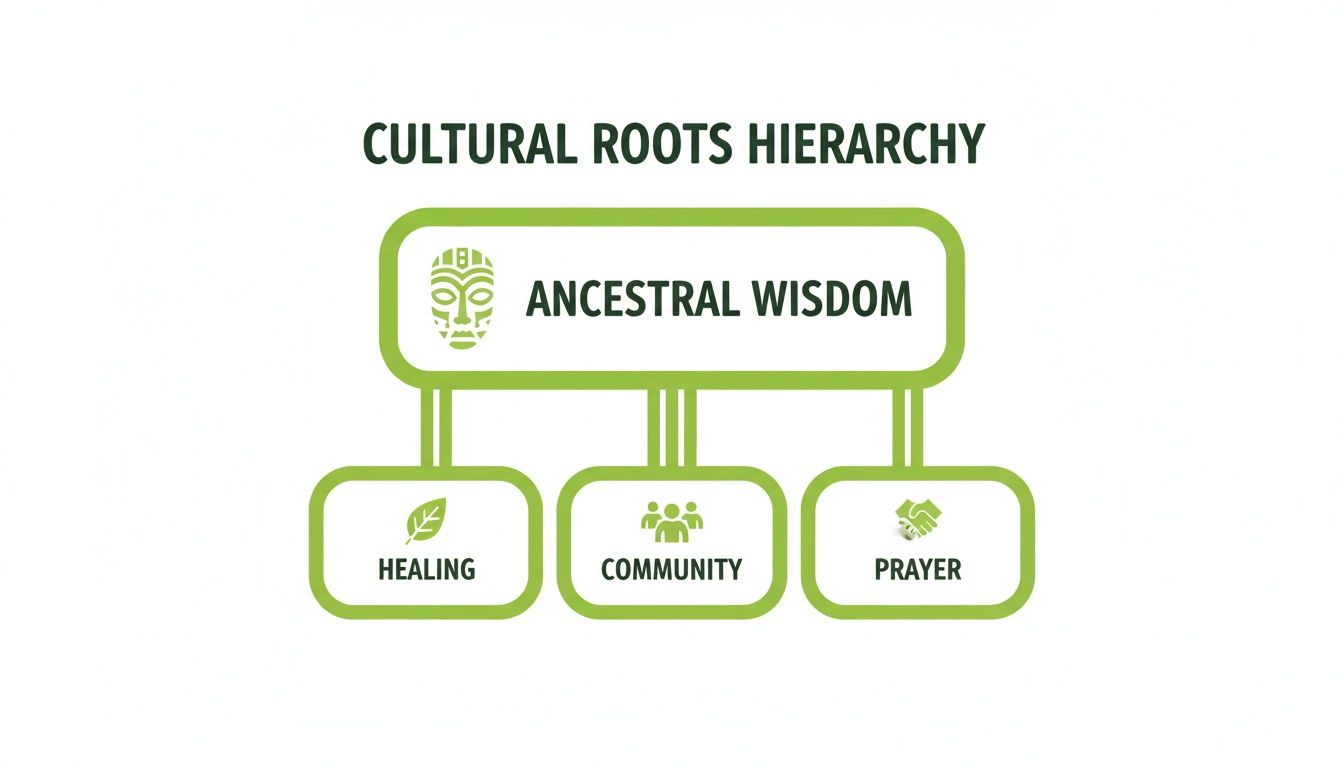
As you can see, everything flows from this deep, ancestral knowledge. It's the source from which the pillars of ceremonial use emerge.
The Role of Sacred Ashes
After Mapacho, the second key component is almost always ash, or cinzas, from sacred trees or plants. These ashes are far more than simple fillers; they are powerful alchemical ingredients. They work to stabilise and potentise the blend, carrying the spirit and medicinal properties of the tree they came from.
The choice of ash has a dramatic effect on the rapé's final character. Some of the most respected ashes include:
- Tsunu Ash: Sourced from the Platycyamus regnellii tree, Tsunu is known for its strong, grounding, and purifying properties. It’s a go-to for deep energetic cleansing and realignment.
- Pau Pereira Ash: Also called Paricá, this ash comes from the Geissospermum vellosii tree. It tends to lend a smooth, uplifting, and expansive quality to blends, making it wonderful for opening the heart and mind.
- Mulateiro Ash: Derived from the Calycophyllum spruceanum tree, which is famous in the Amazon for its rejuvenating qualities. This ash is believed to help restore energetic balance and release built-up tension.
The careful selection and preparation of these ashes is a deeply traditional art, requiring knowledge that has been passed down through countless generations.
The spirit of a rapé blend is a symphony of its parts. The Mapacho provides the foundational rhythm, the ashes create the harmony, and the additional herbs and seeds add the unique melody that defines its purpose.
Blends Organised by Intention
With the foundation of plants and ash firmly in place, artisans then add other botanicals to fine-tune the medicine for specific energetic outcomes. The most practical way to understand the huge variety of rapé available is to think about it in terms of its intended purpose. This helps you choose a medicine that truly aligns with your ceremonial goals.
To give you a better sense of this diversity, the table below breaks down a few common blend types, their ingredients, and their primary focus.
Comparing Common Rapé Blends
| Blend Type | Key Ingredients | Primary Energetic Focus |
|---|---|---|
| Grounding & Centring | Mapacho, Tsunu Ash, Earthy Roots | Anchoring, Calming, Stabilising |
| Clarifying & Focusing | Mapacho, Pau Pereira Ash, Mint/Herbs | Mental Clarity, Focus, Energising |
| Heart-Opening & Emotional | Mapacho, Mulateiro Ash, Flowers (e.g., Cacao) | Compassion, Connection, Emotional Release |
| Spiritual & Visionary | Mapacho, various Ashes, other Psychoactive Plants | Deep Meditation, Inner Vision, Connection to Spirit |
Exploring the different types of sacred Amazonian rapé available can offer a much clearer picture of what's possible with these medicines. As the table shows, blends generally fall into a few key categories:
- Grounding and Centring Blends: These are designed to pull your energy out of an anxious mind and anchor it firmly in your body. They often feel strong, deep, and earthy—perfect for settling into a meditative state.
- Clarifying and Focusing Blends: Formulated to cut straight through mental fog and sharpen your awareness. These blends can feel sharp and stimulating, making them excellent for enhancing focus or preparing for deep introspective work.
- Heart-Opening and Emotional Blends: Often gentler and more expansive, these are created to foster compassion, connection, and emotional release. They work directly on the heart chakra, helping to soften defences and cultivate love.
- Spiritual and Visionary Blends: Certain blends incorporate other energetically potent plants to facilitate a deeper connection to spirit and inner vision. These are powerful medicines, typically reserved for more experienced practitioners in a dedicated ceremonial setting.
Each of these rapé blends is a living testament to the sophisticated botanical knowledge of the Indigenous peoples of the Amazon. They aren't just simple mixtures of powders; they are carefully composed prayers, each one designed to guide you towards a specific state of being.
How to Use Rapé in a Ceremonial Setting
Working with Amazonian spiritual powder is a deeply intentional act, a world away from any kind of casual use. At its heart, a rapé ceremony is a conversation between you, the plant medicine, and the spirit world.
To approach it with the respect it commands, it's vital to understand the flow of the ritual. This holds true whether you're administering it to yourself or receiving it from an experienced facilitator.
The whole practice is anchored in intention. It’s about much more than just the physical act of blowing the powder; it’s about mindfully creating a sacred space, both around you and within you, to do focused spiritual work. This preparation is the bedrock of any meaningful experience.
Preparing for the Ceremony
Before the medicine is even brought out, the first step is to cultivate a clear and supportive environment. This simple act sets the tone for your entire journey and demonstrates reverence for the ancient traditions you are honouring.
- Set Your Intention: What are you seeking from this experience? Take a moment to ask yourself why you're coming to the medicine. Perhaps you need clarity on a specific challenge, want to release heavy energy, or simply wish to ground yourself and connect more deeply with your inner wisdom. Hold this intention clearly in your mind and heart.
- Create a Sacred Space: Find a quiet, clean, and comfortable spot where you won't be disturbed. You might light a candle, burn some Palo Santo wood to cleanse the energy, or put on some gentle, meditative music. The goal is to signal to your entire being that this time is special and set apart from the rush of daily life.
- Choose Your Applicator: The tools used for administration are just as significant as the rapé itself. There are two main types of applicators, each designed for a different ceremonial context.
The Sacred Tools: Tepi and Kuripe
The application of rapé is done using specific instruments that channel the flow of breath and medicine. Your choice of tool depends entirely on whether you are working alone or with another person.
- The Tepi: This is a long pipe, which can be straight or V-shaped, traditionally made from bone, wood, or bamboo. A Tepi is used when one person serves rapé to another. One end goes into the server's mouth, and the other is placed gently at the recipient's nostril. This method is a profound exchange built on connection, trust, and shared intention.
- The Kuripe: This is a smaller, V-shaped pipe designed for self-administration. A Kuripe allows you to connect your mouth to your own nostril, enabling you to deliver the sacred blow to yourself. It's the perfect tool for personal ritual, introspection, and self-healing.
The act of blowing the rapé is known as the sopro, which translates to the sacred blow. It’s seen as a direct transfer of healing energy, intention, and spirit from the giver to the receiver. To understand more about the deep connection these tools facilitate, feel free to explore our guide on how rapé and Kuripe connect us to the Amazon.
The Ceremonial Process Step-by-Step
With your space prepared and your intention firmly in mind, you're ready to begin. It's essential to serve both nostrils to maintain energetic balance within the body.
- Measure the Rapé: Start by placing a small, pea-sized amount of the powder into your palm. Divide it into two equal portions, one for each nostril. Always begin with a smaller amount; you can take more later, but you can't take less.
- Load the Applicator: Carefully scoop one of the portions into the nostril-end of your Kuripe or Tepi.
- Position and Breathe: Take a deep breath and hold it. If using a Kuripe, bring the mouth-end to your lips and the other end to your left nostril first. Traditionally, the left side represents receiving and letting go. If a facilitator is serving you with a Tepi, they will gently position it for you.
- Administer the Sopro: Deliver a short, sharp blow that comes from your diaphragm, not a long, slow exhale. The force should be firm and intentional, but not overly aggressive.
- Receive and Centre: Immediately after the blow, keep your head upright and focus on breathing slowly through your mouth. Allow the medicine to settle. As the initial intense sensation washes over you, bring your focus back to your intention. Think of it like a plunge into icy water—shocking at first, but ultimately purifying and incredibly invigorating.
- Repeat on the Other Side: Once you feel centred, load the second portion of rapé and repeat the process for your right nostril. Serving the right side is traditionally seen as grounding the experience and anchoring your prayer or intention.
The initial intensity is a fundamental part of the process. It serves to instantly silence the chattering mind, cut through energetic clutter, and pull your awareness directly and powerfully into the present moment. The key is to surrender to this sensation rather than resisting it; that’s how you receive the medicine’s full gifts.
After serving both sides, the most important part begins. Remain seated in quiet meditation. This is your time to listen, observe, and integrate the healing and clarity that the Amazonian spiritual powder offers.
The Benefits of Working with Rapé
People from all walks of life are discovering Amazonian spiritual powder, drawn by stories of its ability to bring about profound shifts in wellbeing. When people talk about the benefits of this sacred medicine, they often describe them across three interwoven dimensions: the physical, the mental, and the spiritual. These aren't separate experiences; they flow into one another, creating a holistic sense of cleansing and realignment.
On a purely physical level, one of the first things you'll notice is a powerful clearing of the sinuses and nasal passages. This initial purge is often seen as the medicine getting to work, physically sweeping away blockages so you can breathe more deeply and smell more acutely. Beyond that, many people describe a deep feeling of being grounded in their bodies, a sense of being present and anchored in their physical self.
This very sense of being grounded is what sets the stage for the mental benefits to emerge.
Cultivating Mental Silence and Clarity
Perhaps the most sought-after benefit of working with rapé is its incredible power to quieten the ‘monkey mind’—that constant internal chatter of thoughts, worries, and to-do lists. The sharp, focused energy of the medicine can bring that relentless stream of noise to a sudden halt.
This abrupt mental stillness makes room for real clarity. It's like wiping a dusty window clean; all at once, the landscape of your inner world becomes sharper and more defined. It's for this very reason that Amazonian powder is such a valued tool for meditation and introspection. It helps people get past the surface chatter and drop into deeper states of focus and awareness.
Spiritual Cleansing and Connection
At its heart, rapé is a tool for spiritual and energetic work. Indigenous traditions have used it for centuries for its purifying qualities, believing it can cleanse a person's energetic field of heavy, stagnant, or negative influences. People often describe this as an 'energetic reset', leaving them feeling lighter, more protected, and back in alignment.
This cleansing is believed to strengthen the connection to your inner self, or spirit. By clearing away energetic clutter and mental noise, rapé helps open a direct channel to your intuition and inner guidance. It can also foster a more profound sense of connection to the natural world and something greater than oneself.
The powerful psychological effects of these ancient practices are starting to be recognised in modern research. A fascinating field study in the Peruvian Amazon followed individuals through a week of treatment with a traditional specialist. Using established psychological scales, the research documented significant drops in anxiety, depression, and stress levels following the ceremonial work. You can read the full findings of this pioneering research on traditional Amazonian plants therapy on PMC NCBI.
At its core, rapé acts as a powerful catalyst for presence. It forcibly pulls your awareness out of past regrets and future anxieties, anchoring it firmly in the here and now. This return to the present moment is where true healing and clarity can begin.
Ultimately, the benefits are woven together, blending physical release, mental calm, and a spiritual opening. It’s a potent reminder that our wellbeing is interconnected—that by tending to one part of ourselves, we inevitably support the whole. In a world that rarely stops moving, this practice offers a direct path back to stillness.
Navigating Safety and Ethical Sourcing
Working with Amazonian spiritual powder is about more than just the ceremony itself. It’s a commitment. It requires a genuine respect for the medicine, for your own wellbeing, and for the deep-rooted Indigenous traditions that have stewarded this knowledge for generations. To walk this path responsibly, you need to be mindful of both your personal safety and where your rapé actually comes from.
If you’re just starting out, the single most important piece of advice is to start with a very small amount. A portion roughly the size of a small pea, split between both nostrils, is plenty for a first-time experience. This gives you a chance to feel out the medicine's intensity and effects without being thrown into the deep end. You can always serve more in another session, but you can't take less once it's been administered.
Personal Safety and Best Practices
A safe, meaningful experience is built on a foundation of thoughtful preparation and being honest with yourself. Creating the right environment and, most importantly, listening to your body are absolutely essential when working with this sacred powder.
Here are a few key things to keep in mind:
- Create a Supportive Setting: Only use rapé in a calm, safe place where you won't be interrupted. This could be a quiet room in your home or a peaceful spot in nature. The goal is to feel secure enough to relax and receive the medicine’s full effects.
- Listen to Your Body: This is non-negotiable. Pay close attention to how you're feeling. If you start to feel any serious discomfort, dizziness, or nausea, don't fight it. Just sit quietly, breathe gently through your mouth, and allow the feeling to pass.
- Avoid Daily Use: To keep from building a tolerance and to truly honour the spirit of the medicine, it's best to avoid using it every day. Keep it for intentional, ceremonial moments rather than letting it become a habit.
When you approach rapé with clear intention instead of habit, you foster a relationship of respect with the medicine. This ensures every ceremony is a focused, meaningful act of healing and connection.
The Importance of Ethical Sourcing
Just as crucial as your own safety is making sure your rapé is ethically sourced. The surge in global interest has put a lot of pressure on the Amazonian communities that produce it. What was once a local tradition has now become a part of the international wellness scene. While this has created a fascinating bridge between ancient Indigenous knowledge and modern seekers, it also opens the door to potential exploitation. You can read more about the globalisation of these practices at Frontiers.
Ethical sourcing really just means choosing suppliers who have a direct, supportive relationship with the Indigenous tribes—the true guardians of this ancestral wisdom. It ensures the communities are paid fairly, their cultural traditions are honoured, and the rainforest is protected. By supporting these fair-trade connections, you’re actively giving back and helping to preserve the integrity of this sacred practice.
Finally, a quick word on legality. While rapé is legal in most of Europe, it’s always your responsibility to know and follow the laws where you live.
Common Questions About Amazonian Spiritual Powder
It's completely normal to have practical questions when you first start exploring Amazonian spiritual powder. This is a practice steeped in tradition and nuance, and getting clear on the basics helps you approach it with the respect and confidence it deserves. Let's walk through some of the most common queries people have when they begin working with this sacred medicine.
How Often Can I Use Rapé Safely?
This is probably one of the most important questions, and the answer isn't about a rigid schedule—it’s about intention. There's no "official" safe frequency. Those who work with rapé responsibly treat it as a powerful ceremonial tool, not as a casual daily habit.
By reserving its use for specific, intentional moments—maybe once a week or a few times a month for deep meditation or spiritual cleansing—you avoid building a physical tolerance. Even more importantly, this approach preserves your sacred connection to the medicine, making sure every ceremony is as powerful and meaningful as the first. Using it daily can weaken its spiritual effect and raises the risk of nicotine dependence.
Is It Safe with Pre-existing Health Conditions?
You absolutely have to be cautious here. Because rapé contains a high concentration of Mapacho, it can have a noticeable effect on your heart rate and blood pressure. As a general rule, it's not recommended for anyone with chronic respiratory issues like sinusitis, rhinitis, or asthma, as it can easily irritate the nasal passages and make symptoms worse.
It could also interact with medications for conditions such as:
- High blood pressure
- Heart conditions
- Anxiety or depression
Always speak with a healthcare professional before trying rapé if you have any pre-existing medical conditions or are taking prescription medication. Your health and safety have to be the top priority, without exception.
The spirit of this medicine is one of healing and clarity. Honouring that spirit means listening to your body's wisdom and limitations, ensuring your practice supports your overall wellbeing rather than compromising it.
How Long Does Rapé Stay Fresh?
Proper storage is crucial for keeping your Amazonian spiritual powder potent and preserving its spirit. If you store it correctly, a good blend can stay fresh and powerful for many months, sometimes even for over a year.
The key is to keep it in a completely airtight container. Find a cool, dark, and dry spot for it, well away from direct sunlight and humidity, as these will quickly degrade its quality. If you ever notice a musty smell, see it clumping in an unusual way, or spot any signs of mould, the safest thing to do is discard it and get a fresh supply. This simple bit of care ensures the medicine you're working with is always pure and at its best.
At AYNI RAPÉ, we are dedicated to providing ethically sourced, high-quality rapé and ceremonial tools to support your sacred practice. Explore our authentic blends and handcrafted applicators to deepen your connection to this ancient Amazonian wisdom.


