
Rapé is a sacred blend, a finely ground powder made from powerful plants found deep within the Amazon. For thousands of years, it has been used by indigenous tribes not as a recreational substance, but as a profound tool for spiritual connection and mental clarity. At its heart is a potent wild plant known as Mapacho, a world away from the commercial many of us are familiar with.
Think of rapé less as an escape and more as a key—one that unlocks deeper states of meditation, grounding, and razor-sharp focus.
What Is Rapé and How Is It Used?
At its core, rapé (pronounced 'ha-peh') is a traditional medicine. Indigenous communities in the Amazon prepare it by blending sacred plants into a fine, aromatic powder. This isn't something you smoke or chew; instead, it’s administered through the nostrils for an immediate and powerful effect on the body, mind, and spirit.
The experience is intense and happens in an instant. The powder is blown into each nostril using a special applicator in a ritual that's seen as a sacred, prayerful exchange of energy. The intention is to clear away negativity, quiet the mind, and connect the user to the spirit of the plants and the earth.
A Sacred Tool, Not a Recreational Substance
It's absolutely crucial to separate sacred rapé from recreational. While both contain nicotine, their purpose, composition, and spirit are fundamentally different. Commercial is often packed with chemicals and used as a habit. Rapé, on the other hand, is prepared with deep reverence and clear intention.
In the heart of the Amazon, tribes like the Kaxinawá, Yawanawá, and Katukina have guarded these traditions for centuries, with rapé being a cornerstone of their spiritual and medicinal lives. Its use can be traced back thousands of years across South America, especially in Peru and Brazil—the very heartlands that AYNI RAPÉ honours by sourcing directly from these communities. You can learn more about the history of smokeless and its cultural significance to get a broader perspective.
Rapé is medicine for the mind, spirit, and soul. It is not for recreation; it is for reconnection. The purpose is to bring you into the present moment with clarity and focus.
The Purpose and Significance
The main purpose of rapé is energetic and spiritual cleansing. Indigenous communities turn to it for a number of reasons, all rooted in a deep respect for the plant's power.
These uses often include:
-
Clearing the Mind: It has an incredible ability to silence mental chatter, paving the way for deep meditation and a feeling of pure presence.
-
Grounding and Centring: The medicine anchors you firmly in your body, bringing a profound sense of stability and calm.
-
Opening Spiritual Channels: Many traditional beliefs hold that it helps to decalcify the pineal gland, which is thought to enhance spiritual perception and insight.
-
Physical Cleansing: On a more physical level, it can clear sinuses, offer relief from headaches, and help the body purge stagnant energy.
Ultimately, rapé acts as a bridge, linking our physical selves to the spiritual realm. It's a guide that offers clarity, protection, and a deep sense of connection to ancient wisdom, setting the stage for you to explore its history and the intentional practices that surround this powerful plant medicine.
The Cultural Roots of Sacred Rapé
To really grasp what rapé is all about, you have to go back in time—thousands of years, deep into the heart of the Amazon basin. This sacred powder isn't some new-age trend; it's a cornerstone of shamanic practice, deeply woven into the spiritual and cultural lives of indigenous tribes across Peru and Brazil. For them, rapé is far more than powder. It’s a revered master plant teacher.
The story starts with Mapacho (Nicotiana rustica), a potent, wild species of. It's worlds apart from the commercial plants most of us know. While commercial plants often carries negative associations with health and addiction, Mapacho is held in the highest regard as a sacred plant—a powerful spiritual guide and a protector.
This difference is absolutely fundamental. In Amazonian cosmology, Mapacho is a spirit that cleanses, grounds, and connects. It’s the energetic heart of the rapé practice, turning a simple blend of plants into a profound tool for spiritual work.
A Bridge to the Spirit World
For generations, rapé has been a vital link to the spirit world. Shamans and tribal members use it to open up energetic channels, clear the mind for visions, and communicate with the spirits of nature. It’s a central part of healing rituals, spiritual divination, and key community ceremonies.
Even the way rapé is administered is a sacred act. When shared using a Tepi, a long pipe used to blow the powder into another person’s nose, the giver's breath—their soplada—is seen as a direct transfer of their intention, prayer, and healing energy. This beautiful act strengthens community bonds and supports collective spiritual work.
Rapé is considered a medicine for the mind, spirit, and body. Its purpose is to clear away mental fog, release negative energies, and align a person with their higher self and the wisdom of the forest.
This sacred medicine is often used to prepare for other ceremonies, like those involving Ayahuasca, as it clears a person’s energy field and sharpens their focus. It's also used to ground and integrate experiences after a deep spiritual journey, bringing a sense of clarity and stability back to the individual.
The Heartbeat of Amazonian Tradition
The tradition of using rapé is very much alive, passed down through oral history and direct apprenticeship from one generation to the next. Tribes like the Yawanawá, Huni Kuin, and Katukina each have their own unique stories, songs, and prayers that go with their specific rapé blends. These traditions ensure the medicine is always prepared and used with the deepest respect and integrity.
Historians trace the origins of back to the Peruvian Amazon somewhere between 5000-3000 BCE. Since then, rapé has been a grounding force in ceremonies, offering what tribal lore describes as natural support for stress and focus. Looking at the numbers today, Brazil stands out as a major hub for smokeless like rapé, with public health data reporting 8,475,913 current users. This is a massive figure, especially when compared to the 2,694,133 users in Argentina and 1,264,217 in Peru—both key areas where Amazonian tribes keep these ancient practices alive. You can read more about smokeless use across the Americas on PMC.
This enduring legacy really speaks to the deep cultural weight rapé carries. By taking the time to understand its roots, we can build a genuine respect for the ancient traditions that this powerful plant medicine comes from. You can learn more about how the breath of the forest connects us to the Amazon in our related article.
Exploring Different Rapé Blends and Ingredients
The world of rapé is a rich and varied tapestry, woven from countless botanicals found in the Amazon. While Mapacho (Nicotiana rustica) forms the powerful, grounding base of most blends, it’s the addition of other plants and sacred ashes that truly defines each one's unique character and energetic signature.
Think of Mapacho as the canvas. The other ingredients are the colours an artist uses to create a specific mood or feeling. Just as a painter might choose deep blues for a calming scene or vibrant reds for an energising one, the makers of rapé select specific plants to guide the experience toward a particular intention.
This careful combination is what makes rapé such a versatile tool. One blend might be designed for deep, quiet meditation, while another is crafted to unlock creative insights or provide a burst of focused energy.
The Foundational Role of Sacred Ashes
After the Mapacho, the most significant component in many blends is the ash from sacred trees. These ashes, known as cinzas in Portuguese, aren’t just fillers. They are potent elements that stabilise the blend and carry their own distinct spiritual properties. They also act as an alkaline agent, which helps the body absorb the medicine more effectively through the nasal passages.
Two of the most revered ashes come from the Tsunu and Cumaru trees:
-
Tsunu Ash: Sourced from the Platycyamus regnellii tree, Tsunu is known for its deeply grounding, purifying, and protective qualities. Blends featuring Tsunu are often used for energetic cleansing, releasing heavy or stagnant energies, and bringing a sense of balance.
-
Cumaru Ash: Derived from the Dipteryx odorata or Tonka Bean tree, Cumaru ash adds a fragrant, warming, and uplifting energy. It’s often associated with strength, focus, and opening the heart, making it ideal for creative work or ceremonial intentions.
The historical tapestry of rapé in the indigenous realms of Peru and Brazil is woven through shamanic lineages where Nicotiana rustica, or Mapacho, powers rituals with its elevated nicotine content. In Peru, the cradle of with archaeological evidence dating back to 3000 BCE, statistics show 1,264,217 individuals engage with smokeless forms like rapé. These tribes blend it with everything from tonka beans to sacred ashes. You can find more insights about shamanic plant use on Hoboes.com.
Botanical Allies Shaping the Experience
Beyond the ashes, a vast array of other plants are added to create specific effects. Each herb, flower, or seed brings its own spirit and medicinal properties to the mix.
Each plant has a spirit, a story, and a purpose. When they are combined in a rapé blend, their spirits work together to support the user's intention, creating a symphony of healing energies.
Some common botanical allies you might encounter include:
-
Canela de Velho (Miconia albicans): Known for its relaxing and anti-inflammatory properties, this plant is often used in blends designed to soothe the mind and body.
-
Murici (Byrsonima crassifolia): Associated with masculine energy, Murici is used to bring focus, strength, and stamina, making it a powerful addition for clearing the mind.
-
Cacau (Theobroma cacao): Cacao is a heart-opening medicine that brings a gentle, loving, and slightly euphoric quality to rapé blends.
This synergy between ingredients is what makes exploring different types of rapé so rewarding. For instance, a powerful blend from a specific lineage, such as our Huni Kuin rapé collection, often carries a unique energetic signature passed down through generations.
A Guide To Common Rapé Blend Ingredients and Effects
Getting to know the plants is key to choosing a blend that resonates with your intention. This table offers a quick look at some common ingredients and the qualities they bring to the experience.
| Ingredient | Traditional Use & Energetic Quality | Commonly Used For |
|---|---|---|
| Tsunu Ash | Grounding, purifying, and protective. Releases heavy energy. | Deep cleansing, meditation, and spiritual protection. |
| Cumaru Ash | Warming, uplifting, and heart-opening. Enhances focus. | Creative work, focus, ceremony, and heart-centred intentions. |
| Cacau | Gentle, euphoric, and heart-opening. Promotes connection. | Emotional release, self-love practices, and ceremonial work. |
| Canela de Velho | Soothing and relaxing. Calms the mind and body. | Winding down, meditation, and releasing physical tension. |
| Murici | Strong, focusing, and energising. Associated with masculine energy. | Clearing the mind, mental stamina, and setting strong intentions. |
| Mint (Menta) | Refreshing, clarifying, and opening. Clears the sinuses and mind. | Mental clarity, focus, and invigorating the senses. |
This is just a starting point, of course. The beauty of rapé lies in its incredible diversity, with each blend offering a unique pathway for healing and discovery. As you continue your journey, you'll develop a personal sense of which botanicals and ashes best support your practice.
How to Hold a Sacred Rapé Ceremony
Working with rapé isn’t like popping a vitamin; it’s about stepping into a ceremonial space with reverence and a clear purpose. A sacred rapé ceremony, whether you’re sitting by yourself or with a group, is a practice of intentionally aligning your energy to receive the full depth of what this medicine has to offer.
Think of it like tuning a guitar before you play a song. The ceremony is how you tune your inner self—your mind, body, and spirit—so the rapé can resonate clearly and effectively. This mindful preparation is what elevates the experience from simple use to a genuinely sacred practice.
Without that intentional container, the sensations can feel a bit chaotic or confusing. But when you approach it with a clear intention and a dedicated space, a rapé ceremony can be an incredibly powerful tool for cleansing, grounding, and finding deep insight.
Preparing Your Sacred Space
The first step is always to create a calm and intentional environment. This doesn't mean you need an elaborate altar, just a space where you feel safe, comfortable, and won't be disturbed. Your goal is to send a signal to your own mind that this time is different—it’s set aside for focused inner work.
Here are a few simple things you can do to prepare your space:
-
Find a Quiet Spot: Choose somewhere you can have at least 15-20 minutes of uninterrupted time.
-
Cleanse the Energy: Lighting some Palo Santo or sage and gently smudging the room is a traditional way to clear out any stale or heavy energy.
-
Set the Mood: Dim the lights, light a candle, or put on some gentle, meditative music. Whatever helps you feel peaceful.
-
Gather Your Tools: Have your rapé blend, your Kuripe (for self-application) or Tepi (for sharing with another), and a tissue or cloth within easy reach.
The very act of preparing your space is a form of prayer. It’s an outward sign of your inner commitment to honouring the medicine and the journey ahead.
This preparation isn't just for show; it actively helps to quiet the noise in your head and turn your focus inward. It makes you far more receptive to the clarity and guidance that rapé can bring.
The Ceremonial Process, Step by Step
Once your space feels right, the ceremony can begin. The following steps offer a simple framework for a mindful and respectful practice, whether you're administering it to yourself or sharing it with someone else.
-
Set Your Intention: Before you do anything else, take a moment to connect with yourself. What are you seeking from this experience? Your intention might be to find clarity on a problem, to release a heavy emotion, or simply to feel more grounded and present in your body. Hold that intention firmly in your mind.
-
Measure Your Dose: For anyone new to this, a pea-sized amount split between both nostrils is a sensible starting point. You can always begin with less; it’s always wise to respect the potency of the medicine. Place a small amount on the palm of your hand to load into your applicator.
-
Application with a Kuripe or Tepi:
-
Self-Application (Kuripe): Load half of your measured dose onto the nostril end of your V-shaped Kuripe. Take a deep breath, place the mouthpiece in your mouth and the other end snugly in your left nostril. Lean forward a little and give a sharp, quick blow. Reload and repeat for the right nostril.
-
Sharing (Tepi): When sharing with a Tepi, the process is a sacred exchange. The giver loads the pipe and blows into the receiver's nostrils, offering their breath as a prayerful and intentional transfer of energy.
-
-
Breathe and Receive: Close your eyes straight after the application. The key is to breathe slowly and deeply through your mouth, allowing the sensations to wash over you without fighting them. Keep your head tilted forward so the rapé doesn't drip down the back of your throat.
-
Allow for Integration: Now, just sit in stillness for at least 10-15 minutes. This is where the real work happens. You might feel tingling, experience an emotional release, or find profound mental clarity. Whatever comes up, just observe it without judgement.
The process of creating a rapé blend itself involves a deep connection to the earth's botanicals, as shown in the infographic below.
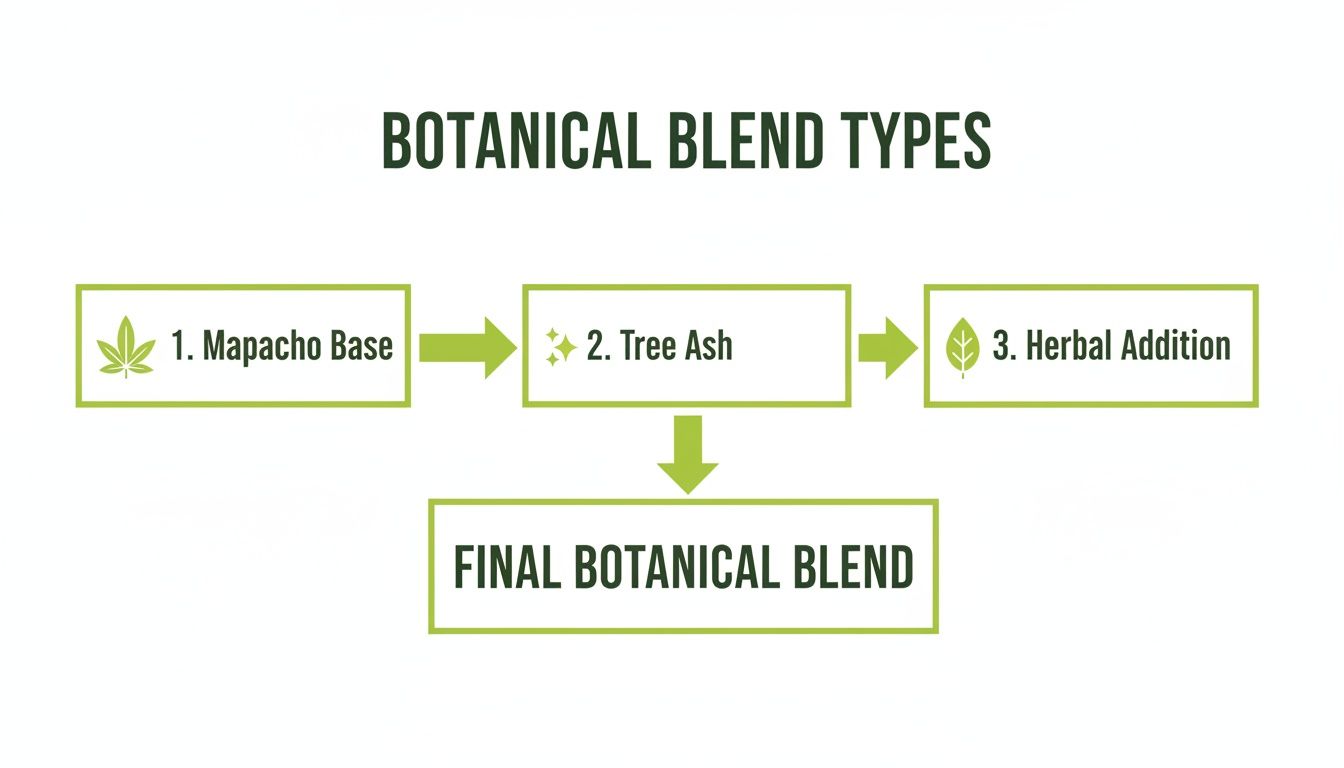
This visual shows how the foundational Mapacho is activated by sacred tree ashes and then tailored with specific herbal additions to create a focused blend.
Normalising the Physical Experience
It's really important to know that a rapé ceremony often brings on intense physical sensations, and this is a completely normal part of its cleansing power. Your eyes will almost certainly water, and you’ll feel a strong need to clear your sinuses. That’s the medicine physically clearing out pathways.
You might also feel a tingling sensation spreading through your head and body as your energy starts to shift. For some, a purge can occur, which might manifest as nausea or needing to spit. These are all signs that the medicine is working to release stagnant energy and toxins from your system. The best way to approach these moments is with an attitude of surrender, trusting that your body is clearing out what it no longer needs.
Understanding Your Ceremonial Tools: Kuripe and Tepi
In any rapé practice, your tools are far more than just accessories. Think of them as a sacred bridge, connecting you directly to the spirit of the medicine. These applicators aren’t simple pipes; they are thoughtfully designed to deliver the rapé powder with precision and intention.
The force of your breath, known as the soplada, is what carries the medicine, and with it, your prayers and energy. It’s this combination of breath and tool that makes the experience so profound. The two main applicators you’ll come across are the Kuripe for self-administration, and the Tepi, used for sharing with another person. While they serve different functions, both are central to the ritual.
The Kuripe: Your Personal Applicator
The Kuripe is a small, V-shaped pipe that’s perfectly crafted for self-application. One end of the ‘V’ fits into your mouth, and the other rests gently in your nostril. This ingenious design lets you use your own breath to blow the rapé into your nasal passages, making it the ideal tool for solo meditation and personal ceremonial work.
Working with a Kuripe is an intimate, introspective practice. You are in complete control, which fosters a powerful sense of self-reliance and deepens the connection to your own intentions. The simple act of serving yourself becomes a ritual of self-healing and inner alignment.
The Tepi: A Tool for Sharing
The Tepi, on the other hand, is a longer pipe—either straight or L-shaped—used to serve rapé to someone else. The giver places one end in their mouth, and the other in the receiver's nostril. This completely shifts the dynamic, turning the practice into a shared exchange of energy built on trust, connection, and mutual respect.
When someone serves you with a Tepi, you're receiving more than just the plant medicine. You are also taking in the focused intention, prayer, and healing energy of the person blowing the rapé. This is why the Tepi is so vital in group ceremonies and partner work, as it beautifully weaves together individual experiences and strengthens community bonds.
The material of your tool matters. Whether it's crafted from sacred wood, bone, or bamboo, each carries its own unique vibration and spirit, adding another layer of meaning to your ceremony. By honouring your tools, you honour the entire tradition.
Choosing and Caring for Your Tools
Finding the right Kuripe or Tepi is a very personal journey. You might be drawn to the grounding energy of wood, the ancestral feeling of bone, or the natural simplicity of bamboo. The most important thing is that it feels right in your hands and creates a good seal for an effective soplada. You can explore a beautiful selection of handcrafted Tepi and Kuripe applicators to find one that truly resonates with you.
Taking care of your tools is just as important, both for hygiene and for keeping their energy clear. After each use, it's good practice to clear out any leftover powder with a small brush or pipe cleaner, or simply by blowing hard through the pipe. This simple ritual ensures your tools stay physically and energetically clean, always ready to support you in your next ceremony.
Sourcing, Safety, and Respectful Practice
Stepping into the world of rapé involves more than just the ceremony itself. It's about building a conscious relationship with the medicine, which means understanding where it comes from, how to engage with it safely, and the legalities of bringing it into your life. As this sacred blend becomes more known, approaching it with integrity is key. This ensures your practice is built on a foundation of respect—for yourself, the medicine, and the indigenous communities who are its guardians.
For anyone in Europe, particularly here in Ireland, the legal side of things is fairly clear. In most of the EU, rapé is legal for personal, ceremonial use. It's generally classified as an ethnographic item or incense, not a controlled substance. Still, it’s always a good idea to double-check the specific regulations in your own country, just to be sure.
The Heart of the Matter: Ethical Sourcing
Where your rapé comes from is probably the single most important factor to consider. The spirit and energy of this medicine are tied directly to the hands and hearts of those who prepare it. Truly ethical sourcing means finding suppliers who have a direct, respectful relationship with the indigenous tribes of the Amazon, particularly in regions of Peru and Brazil.
Why is this so crucial? A direct-trade connection ensures a few things:
-
Fair Compensation: It creates a sustainable income for the communities, helping them preserve their culture and protect their ancestral lands.
-
Authenticity: You receive blends made in the traditional way, infused with the prayers and ancient wisdom of the people who've carried these traditions for generations.
-
Reciprocity: The exchange becomes more than just a purchase. It's a respectful partnership that honours the sacred nature of the plant and its keepers.
When you choose to buy ethically sourced rapé, you're not just a consumer; you're actively helping to preserve an invaluable cultural heritage.
Foundational Safety and Aftercare
Working with rapé demands respect. It's a powerful medicine, and the most fundamental rule is to listen to your body. Always, always start with a small, pea-sized amount to see how a new blend resonates with you. Only then should you consider a slightly larger dose.
Your body is your greatest teacher in this practice. Start small, listen closely, and allow the medicine to guide you. Rushing or overusing it disrespects both the plant and your own inner wisdom.
After your ceremony, looking after yourself is essential for integrating the experience. The cleansing process can leave you feeling quite open and sensitive, so grounding yourself isn't just a good idea—it's a necessary step.
Here are a few simple but powerful aftercare practices:
-
Hydration: Drink plenty of water. This helps your body continue its physical flush and rehydrate.
-
Connect with Nature: If you can, get outside for a few minutes. Putting your bare feet on the earth is an incredible way to ground your energy.
-
Nourishment: Have a light, wholesome meal to help your body feel settled and replenished.
-
Quiet Reflection: Try not to jump straight back into emails or errands. Give yourself some quiet time to journal, meditate, or simply be still and let the experience settle.
By keeping these ethical and safety principles at the forefront, you build a strong, respectful container for your entire journey with rapé.
Your Rapé Questions Answered
As you walk this path, it's natural for questions to pop up. Think of this section as a conversation with a trusted guide, offering straightforward answers to the things people most often ask about rapé. Whether you're just starting or have been working with this medicine for a while, a little clarity can go a long way.
The journey with rapé is deeply personal, but good information creates a solid, safe foundation for your experiences.
How Often Can I Use Rapé?
This is something you'll discover for yourself, and the answer is rooted in your own intention and intuition. Traditionally, you'll find some indigenous communities using it daily to stay grounded and focused, while others might only use it during important ceremonies. If you're new to this, my advice is always to start slow.
Trying a session once a week is a great starting point. It gives you space to really get to know how it works with your body and energy. The key is to remember that rapé is a tool for connection, not a way to check out. By listening to your body and spirit, you'll find a rhythm that feels right and respectful.
What Does Receiving Rapé Feel Like?
The first thing you’ll notice is a sharp, immediate intensity. Don't be surprised if your eyes start to water or you feel a powerful urge to clear your nose—that's a completely normal part of its physical cleansing action.
Energetically, the experience is often described as a sudden quietening of the mind. It’s as if someone turned down the volume on all that internal chatter. You might feel a tingling sensation as energy begins to move, and the experience can range from a profound sense of stillness to a powerful release of stored-up emotion. The best approach is to breathe right through the intensity and just allow the process to unfold.
Is Rapé Addictive?
That’s a fair and crucial question. Rapé is made with Mapacho. However, the way it's used in a ceremonial or sacred setting is worlds away from recreational.
The sheer intensity of the experience and its profound energetic effects aren't something most people would want to do casually. When you approach it with respect and a clear intention as a spiritual tool, the focus is squarely on healing and insight, not creating a habit. The ceremonial container itself acts as a powerful safeguard against misuse.
How Do I Store Rapé and Clean My Tools?
Looking after your medicine and your tools is vital for keeping them effective and pure. To keep your rapé fresh and potent, always store it in a sealed, airtight container.
Find a cool, dark, and dry spot for it, away from moisture and light. As for your Kuripe and Tepi, regular cleaning is important for both hygiene and energetic clarity. After you use them, just run a pipe cleaner or a thin piece of cloth through to clear out any leftover powder. For a deeper clean now and then, you can use a bit of alcohol on the pipe cleaner, but make absolutely sure the applicator is bone dry before you use it again.
At AYNI RAPÉ, we’re dedicated to offering ethically sourced, authentic rapé and beautifully made ceremonial tools to support your practice. Feel free to explore our curated collection and find the blend that can best deepen your connection.


